Life on the West Island - A Watershed Moment
29 September 2023
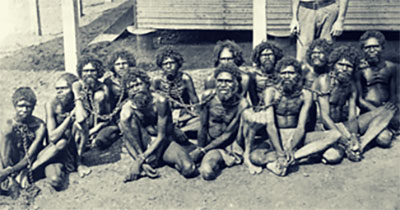
The West Island stands on the edge of a precipice, with opinion polls showing that it is poised to reject a straightforward referendum proposal to recognise First Nations people in its foundational document and to give them direct access to government through a non-binding advisory body. This seemed a simple proposition, given that more than 1,000 lobbyists from tobacco companies, drug manufacturers, fossil fuel miners, gambling corporations and many others already have lobbyists stalking the halls of power in Canberra with open access to federal politicians, ministers and senior public servants seven days a week.
But in an act of populist opportunism, coalition leader Peter Dutton launched a cynical campaign encouraging the nation to reject what he called a “risky” proposal. This has morphed into a disgraceful torrent of lies, distortions, blatant racism and fearmongering, to the point where “If you don’t know, vote no” has become the emblematic fact-free rallying cry for a disparate mish-mash of conspiracy theorists and ambitious far right wing activists, threatening the very nature of West Island democracy.
While the “Yes” campaign has attempted to engage the community with mostly respectful debate and thousands of community consultations and events, the “No” campaign has instead stoked fear and division and argued many contradictory positions. Its leading voices have split on a wide range of matters, including arguments that the proposed Voice to Parliament could veto legislation powers and is far too powerful, while at the same time campaigning for it to be much stronger.
Similarly, campaign leader Warren Mundine went on national television to argue that it would be best for the referendum to fail, because then real negotiations for treaties would then begin and the date of Australia Day could be changed. Co-leader Jacinta Price argued the exact opposite, saying that a “Yes” vote was a threat to social harmony, because it would result in exactly the outcomes that Mundine was promoting. Ironically, both are probably wrong! The Voice is a representative advisory policy on Indigenous issues and could help to inform government policy, particularly in relation to health, education, jobs and housing.
Mundine doubled down, labelling the carefully worded Uluru Statement from the Heart as a “declaration of war on modern Australia,” a remarkable distortion, since that short document invites all West Islanders to walk with First Nations people “in a movement of the Australian people for a better future.”
Rachel Withers, contributing editor of the respected journal The Monthly, documented the recent reckless tactics of the “No” campaign:
There is a Steve Bannon phrase that is increasingly being used to describe the tactics of the “No” camp, as it seeks to tear down the Voice: “flooding the zone with s**t”. The goal is to contaminate the information ecosystem, disorienting voters to the point that they simply switch off.
This week has been shocking, even by the appalling standards of the “No” campaign. Saturday saw disturbing anti-Voice rallies organised by a pro-Kremlin activist, and attended by conspiracy theorists and neo-Nazis, railing against the elite, among other conspiracies. One attendee’s shirt read: “Rope. Tree. Journalist.”
On Tuesday, “No” campaigner Warren Mundine told the National Press Club that the Uluru Statement from the Heart – which won the 2022 Sydney Peace Prize – was a “symbolic declaration of war against modern Australia”, and the Voice a “political ploy to grab power”. (Uluru Dialogue co-chair Megan Davis labelled the comments “Trumpian”, and Noel Pearson, delivering his own NPC address, promised a “peace dividend” from the Voice, calling on Australia to reject the confected culture war.) And just when you might’ve thought things couldn’t get any worse, Warren Mundine shared a post about retired boxer Anthony Mundine threatening to beat up “Yes” campaigner Thomas Mayo, writing, “I want to see that!!!” Tell me, which side of this debate is seeking to divide Australians?
It has long been hypocritical to hear “No” accuse “Yes” of seeking to “divide Australians” – an established strategy that the “No” campaign found played well in focus groups. This, of course is exactly what the “No” camp is doing. It is spreading misinformation about the Voice, stoking conspiracies about the voting process, making inflammatory comments about colonisation, propagating false claims about spending, twisting “Yes” campaigners’ words, or telling angry “No” voters to “maintain the rage”.
It is simply galling for the opposition to argue that the “Yes” camp is the hateful group here, when the “No” camp can’t seem to go a day without finding itself mired in a new racism scandal (including recent racial cleansing comments from its leaders Garry Johns and Senator Gerald Rennick). Hypocritical and galling. And yet, the media coverage continues to treat these as serious arguments, with the Coalition – which, as has been well established, is only opposing this for political gain – still mostly getting away with the unchecked claim that Prime Minister Anthony Albanese is the divisive one.
Hypocritical and galling. And yet, the media coverage continues to treat these as serious arguments, with the Coalition – which, as has been well established, is only opposing this for political gain – still mostly getting away with the unchecked claim that Prime Minister Anthony Albanese is the divisive one. As Kalkadoon and Arrernte filmmaker Rachel Perkins said this week, opponents are “doing their best to create division”, with “Yes” contending with a “disgraceful set of lies”. “History will remember their behaviour in relation to this really historic opportunity for unity,” she said, before referencing the words of her father, trailblazing activist Charles Perkins. “My dad always used to say, ‘we forgive, but we never forget’. And this will not be forgotten by Indigenous people.”
The divisive and reckless “No” campaign has convinced some activists to change sides and vote in favour of the referendum proposal, including, Victorian Indigenous leader Tarneen Onus Browne. She was reported as saying the racist No campaign is dangerous in so many ways and it has made it okay for neo-Nazis to go out onto the streets of Melbourne. It’s important for this country to send a message to them by writing “Yes” in the upcoming referendum.
The West Island faces a watershed moment. Will we support a modest change to the Constitution and begin a process of genuine reconciliation by recognising our appalling history of genocide, slavery and dispossession against First Nations peoples? Or will we simply vote “No” because we don’t want to know?