From seed to art. Written by Meralda Warren 12 May 2022
13 May 2022
From my back yard I was sitting there moving around potting plants. Getting up often to piece together the old throw away cups and putting a hole in the bottom for water drainage. I looked up at the Amea (Miro) tree growing so well that in a years’ time, the view of Christians cave from my back door is now just trees.
This start of last week rounded up a great presentation for an online Zoom meeting with Lagi Maama Tok Stories. Presenting Pitcairn Island. The Ahu Sistas were invited to participate and talking about our Island was a high light of sharing our world which I love to do.
One of the things I talked about was the carvings that we do on Pitcairn.
Not as detailed as I am about to tell you.
The Amea trees were cut down for firewood for boiling salt. The Salt was made down at Down Isaacs and a certain pool was not allowed to be swam in.
The firewood was hauled down and sent over the cliff and folks made turns night and day boiling the water down to make salt then carrying it up in clay jars up the cliff to Adamstown. This tradition soon fazed out as with more ships coming, salt was easier to get and bring ashore. Now it sells at our one store at Parmi Center.
In 1893 there was a schoolteacher who came to Pitcairn. Her name was Hattie Andre. She taught school but also taught the men how to make small boxes and other crafts out of the Amea wood.
She brought with her from Rarotonga, one of the places she visited some seeds of the Hattie leaf or Orchid Tree known as Bauhinia Pupurea. When the trees grew and she harvested the leaves, she was able to teach some of the women how to process the leaves and wash it so only the skeleton remains. These she showed them how to paint art on it. This art is still being done to this day.
The men carved like she taught them and as more ships with passengers onboard came there was more income from the carvings.
Then in 1923 there was an Austrian who came here to live. His name was Eduard Loeffler. He taught some of the men how to carve different things out of the Amea and other wood that was suitable for carving. Sealing it with linseed oil and other sealants they can get their hands on. One of his specialties also was making boxes too. One of his dedicated students was Virgil Christian and he then taught others to carve. Loeffler was a grumpy old man and built a place for him way out from everyone else. Out Tamanu Valley and he wasn’t that well either. He died in 1925.
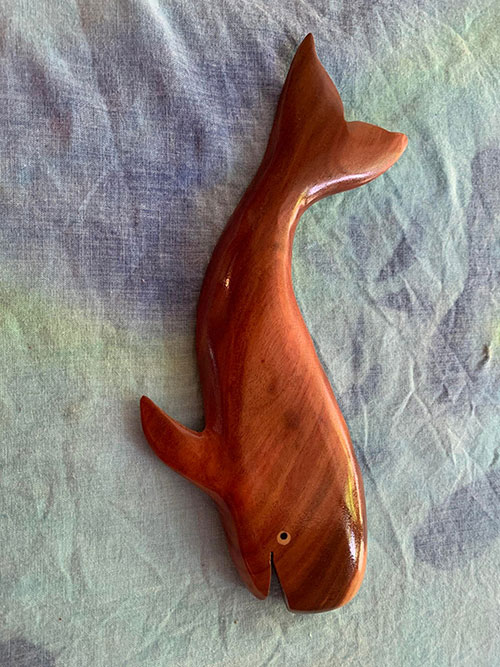
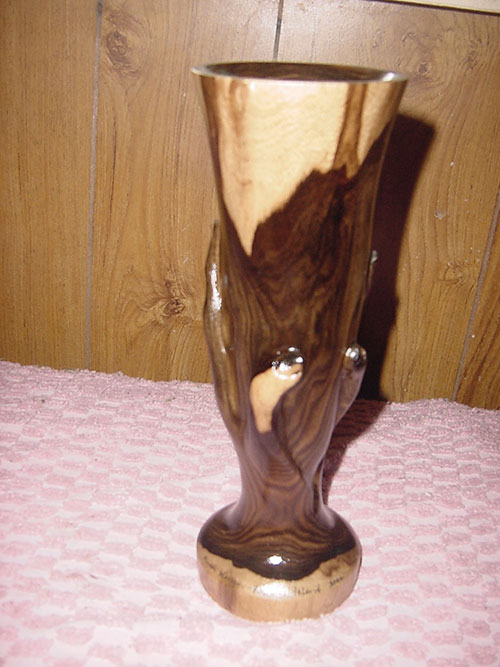
The Carvings were a hit with the ships coming. Sometimes there was 2 or 3 ships per week. Carving developed from just boxes to fishes and then vase. Soon it was hand vase and walking sticks and so on.
The method of chopping down a tree with an Axe then pit sawing it into junks of wood, skinning of the outer bark and drying it well. Split or hand sawn into workable shape and using a hatchet the carving is shaped and more tools coming in made it easier to chisel it into a more refine stage or a carving knife making it even more delicate. They discovered that a glass from a broken windowpane makes the best scraper and broken right using a small file can give a good edge. Scraping the wood smooth before sand papering it smooth. They were able to get sandpaper from the carpenters on the ship by trading for it, but some have been known to use dried sharks’ skin for sandpaper.
Soon with bees coming into the Island, the wax was also used for polishing. Soon cans of wax was brought in from NZ. Some still use varnish or shellac.
In the 70s a guy on a yacht brought in an electric grinder and stayed at Big Fence. Steve Christian soon got the hang of the Makita grinder and the trend started from using a rasp and file to shape the curio to using an angle grinder.
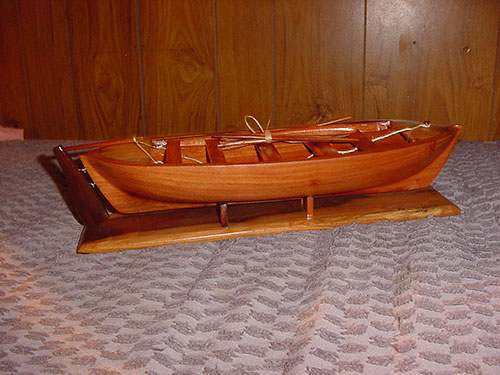
New shapes took place and the old-time sailing ships depicting the Bounty or the Pitcairn or a 3 masted sailing ship, these were carved with a nicer finish and the models of the ships left in natural state instead of being painted.
Around 1996 people returning home from NZ brought in a 2-part sealer and polish and with air compressor it was easier to spray a nicer finish to the
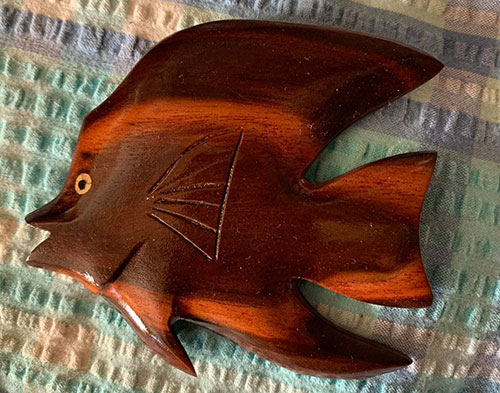
carvings. Waxed carvings had to be stopped as some countries were rejecting the use of bee’s wax as a finisher.
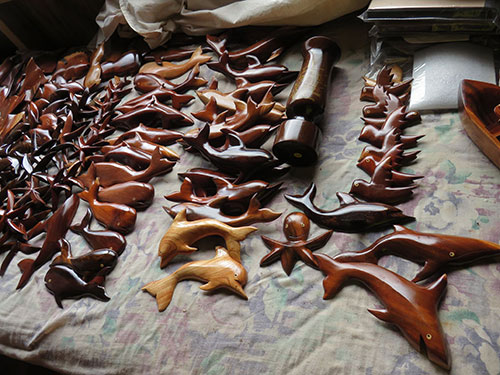
Today the variety of carvings is amazing and being on display at one’s trading table when a ship calls in and we go out is a sight to see. The few ships where passengers come ashore; they get excited to see what is here.
With our boarders closed to the outside world for over 2 years, the folks have been selling their carvings and other arts and curios over the internet and hope the mail goes through ok.
Now that we are open to the outside world, its good that the 3 yachts we have had since 31st of March have come in and to see some happy people leave with some treasures of Pitcairn Art.
I have been lucky in my lifetime to be sitting around the adults and kids with my brother Jay with our parents, as family and friends call around for social visit and scraping or sanding a carving as some of the women help them or weave their baskets or hats.
The kerosene lamps burning bright. As the years move on it then changed to generated diesel power to now solar power. It helped me to appreciate what Pitcairn life is all about that a small gesture of rubbing the sandpaper over the wood in the right way can bond this community in the right direction.